

Capturing Global Motorsport at Speed, Scale & Stamina
There is something entirely different about endurance racing.
It is not just about speed, although there is plenty of that; it is about resilience, strategy, precision and patience. It is about teams, machines and people pushing themselves to their limits over hours, sometimes days, across some of the most iconic circuits in the world.
For me, photographing the FIA World Endurance Championship opened the door to a truly global experience of motorsport. From the forests of Belgium to the heat of Florida and the historic circuits of the UK, it was a chapter of my career that combined travel, storytelling and high-performance racing in the most immersive way.
From Circuit to Circuit: A Global Motorsport Journey
Across 2011 to 2014, I had the opportunity to photograph endurance racing at multiple circuits, each with its own personality, pace and visual language.
These included:
- Circuit de Spa-Francorchamps (2012)
- Sebring International Raceway (2012)
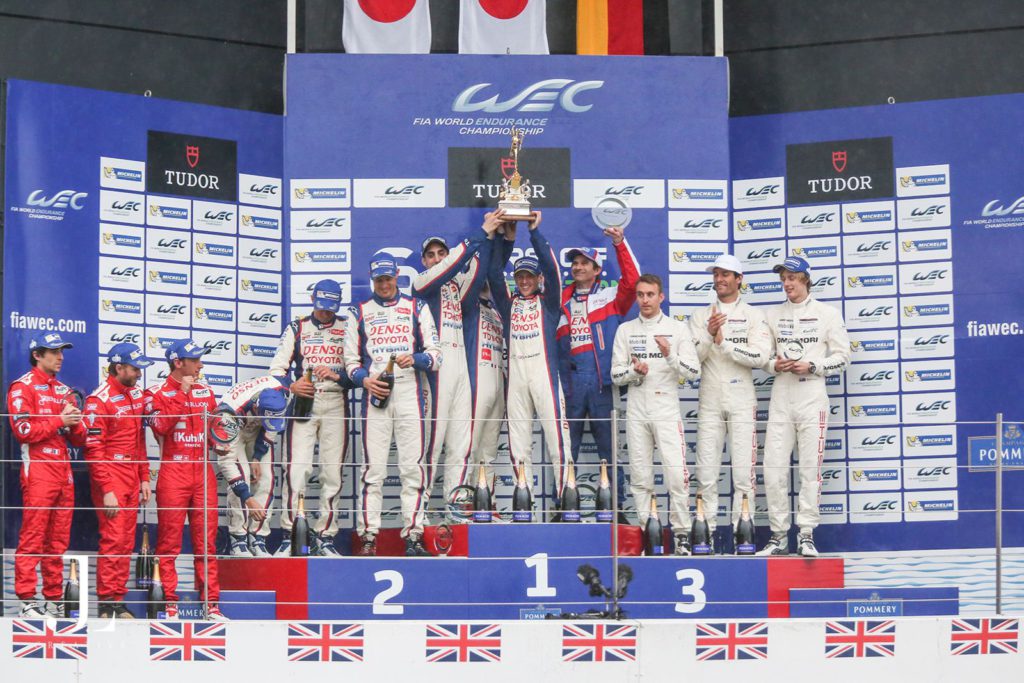
- Silverstone Circuit (2012 & 2014)
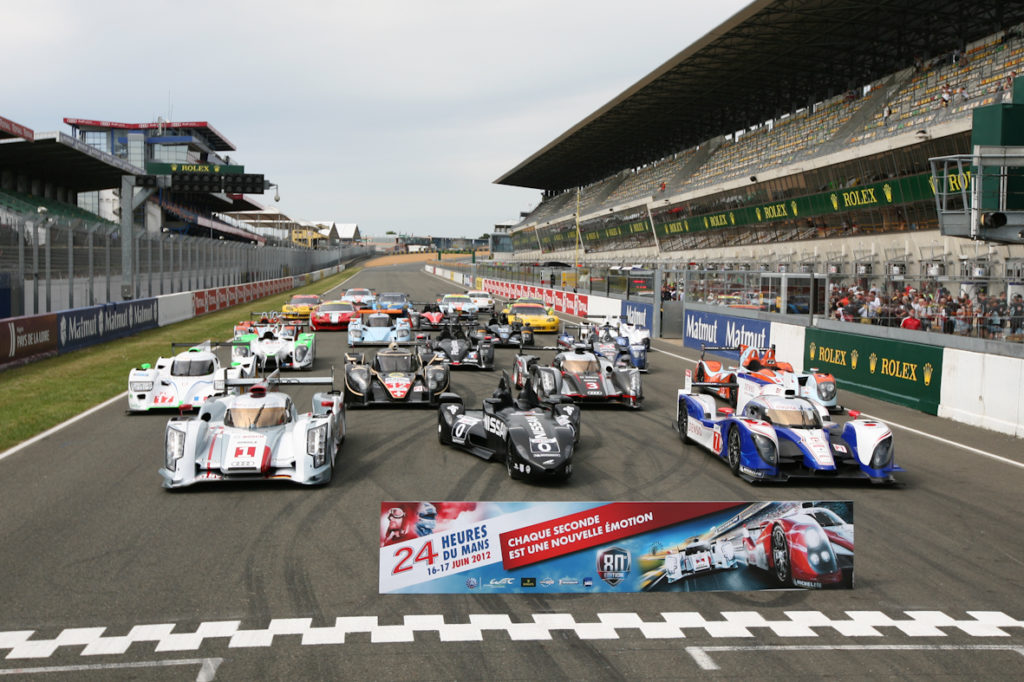
- 24 Hours of Le Mans (2011, 2012, 2013)
Each race demanded something different. Different light, weather, and energy from the crowd. But the constant thread running through all of them was intensity.
Not just on track, but behind the scenes too.
Sebring: Heat, Atmosphere & Pure American Energy
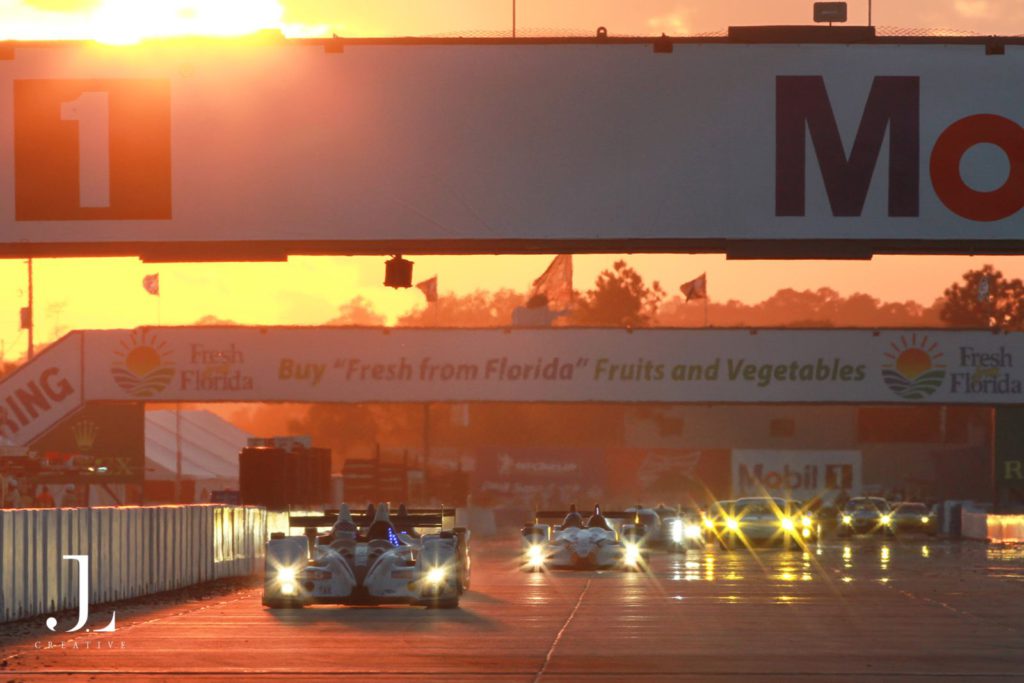
If there is one race that stands out for atmosphere alone, it is 12 Hours of Sebring at Sebring International Raceway.
It has a completely different feel to European racing.
The fans arrive early and stay for the duration, creating what feels more like a festival than a race weekend. RVs are set up in full force, complete with barbecues, seating areas and entire outdoor living spaces. The smell of food carries through the circuit, blending with the sound of engines and the hum of constant activity.
From a photography perspective, the light in Florida is something special. The sunrises and sunsets are rich, warm and cinematic, casting long shadows across the track and creating beautiful backlit opportunities.
It was here that I captured some brilliant moments with the Audi team, including portraits and behind-the-scenes images of drivers such as:
Tom actually really liked one of the portraits I took of him, which, at that stage in my career, felt like a real moment.
And then, just casually, you’d find legends like Emerson Fittipaldi walking the pit lane during the grid walk. That kind of access, that closeness to the sport, is something that makes endurance racing so special to photograph.


Spa-Francorchamps: Drama, Weather & Iconic Landscapes
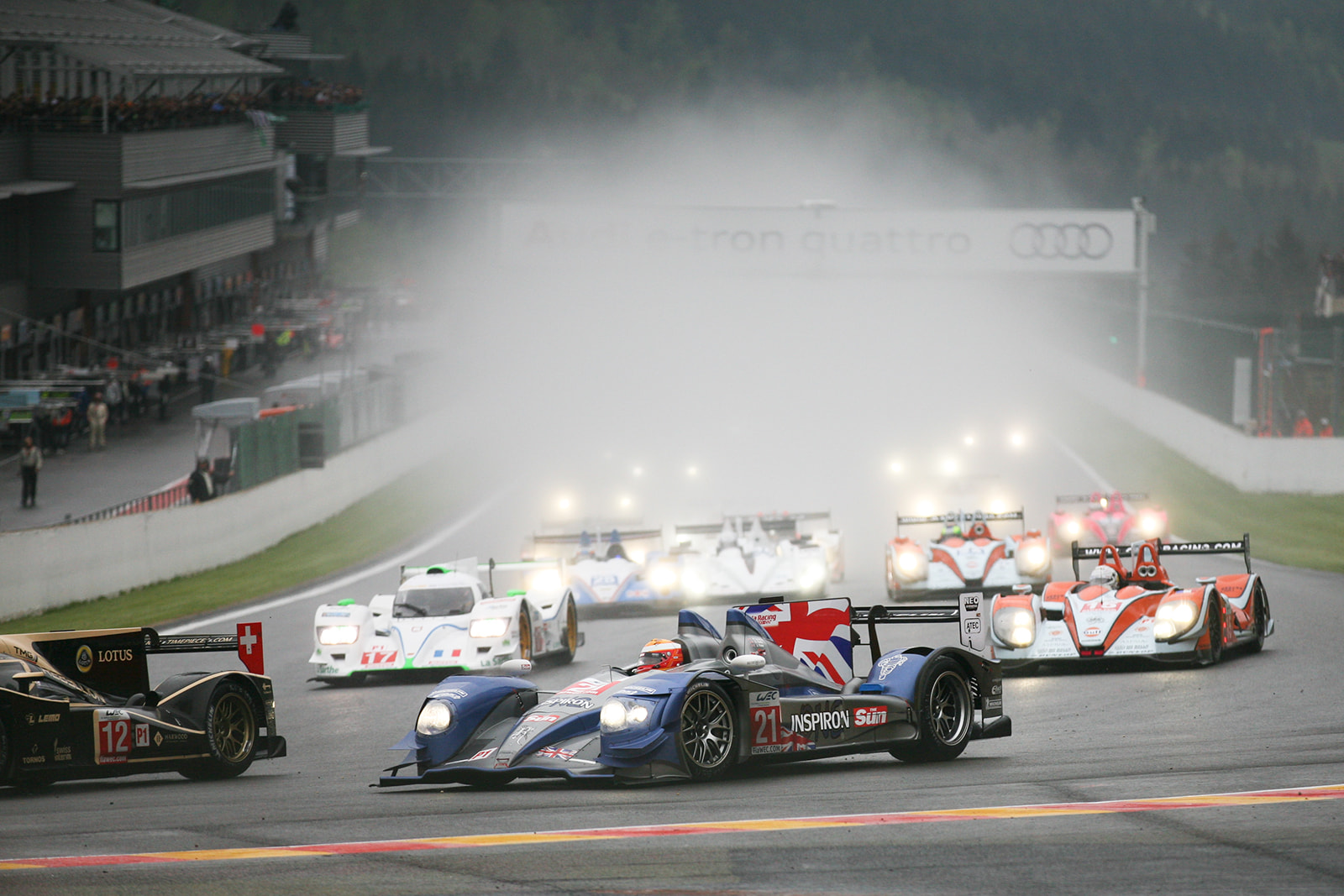
If Sebring is about warmth and atmosphere, then Circuit de Spa-Francorchamps is about drama.
Set within the Ardennes forest, Spa is known for its unpredictable weather and sweeping elevation changes. One moment it is dry, the next you are dealing with rain and heavy spray coming off the cars.
Photographing the race start there is something I will never forget. The pack launches forward, tightly grouped, with the forest rising behind them and the track curving into the distance. Add in rain, and suddenly you have layers of texture, movement and atmosphere that are visually incredible.
The spray from the tyres creates this almost painterly effect. It softens the edges, adds depth and makes every frame feel dynamic.
It is challenging, yes. But it is also incredibly rewarding.
Silverstone: Precision, Pace & British Motorsport Heritage
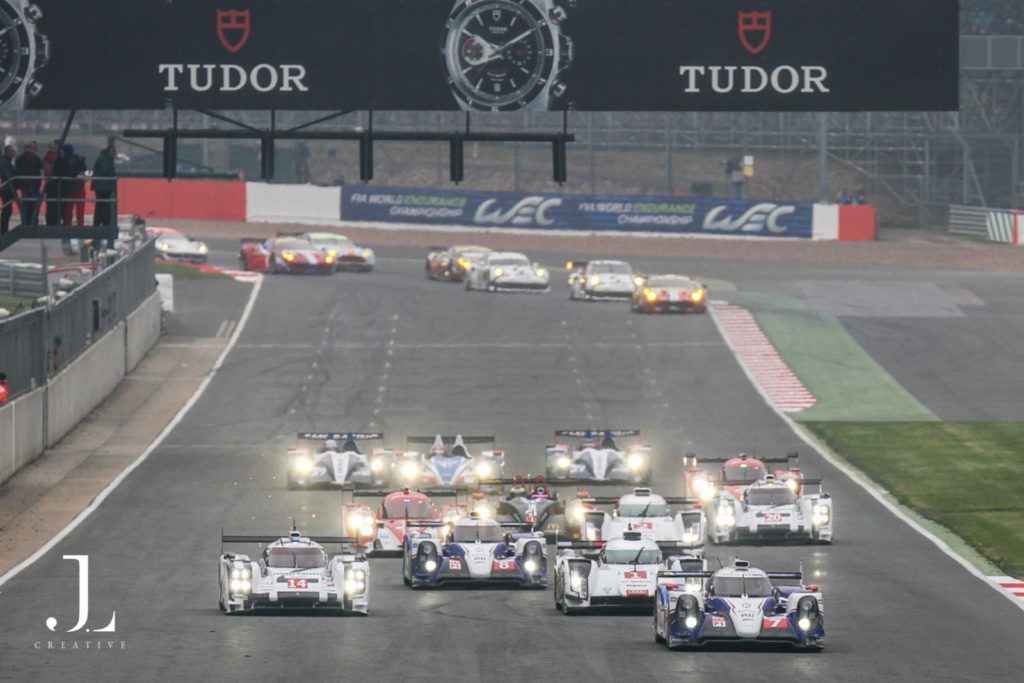
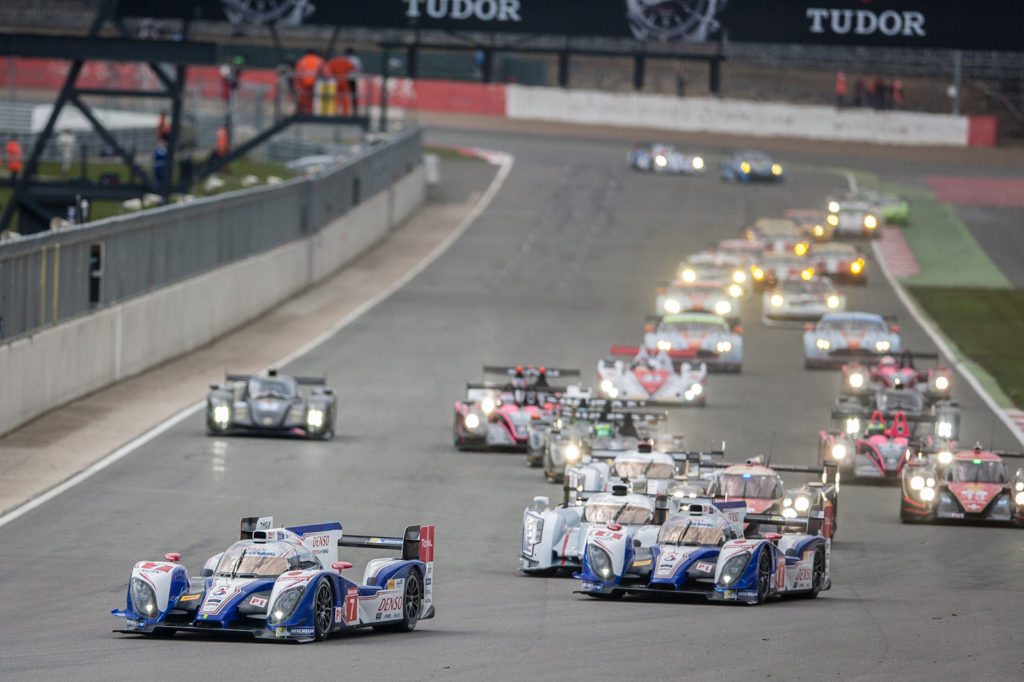
Silverstone Circuit brings a different kind of energy.
It is fast, clean, and precise.
The home of British motorsport, it has a sense of structure and rhythm that contrasts nicely with the unpredictability of circuits like Spa.
Returning there in 2014 and seeing Mark Webber back on track in endurance racing was a great moment. There is always something special about seeing drivers transition between series and continue to perform at such a high level.
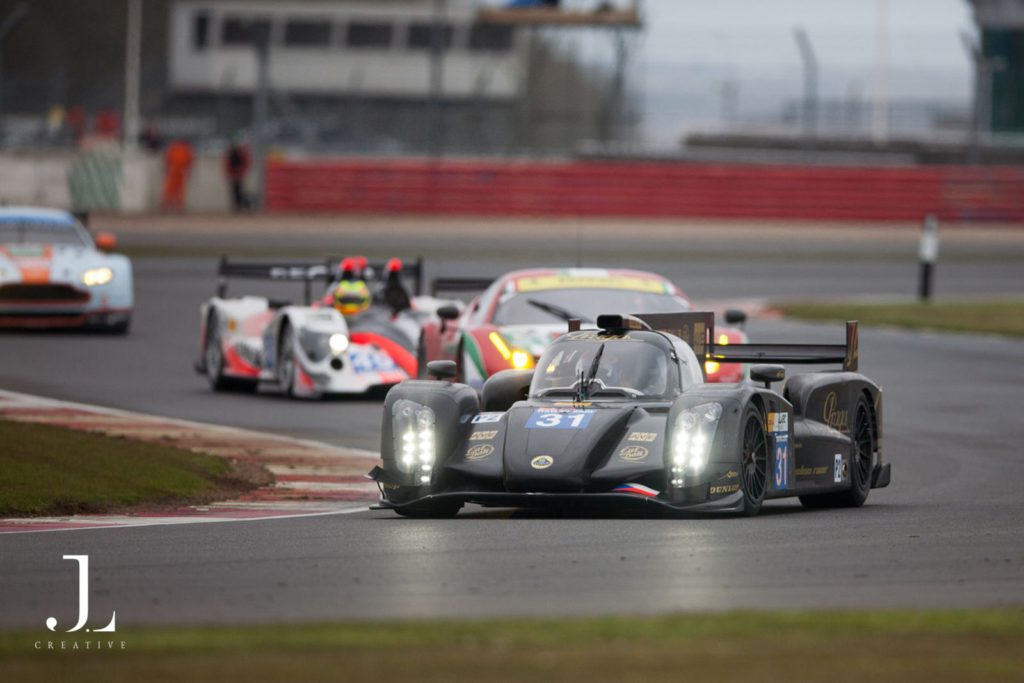
From a photography perspective, Silverstone is about timing and positioning. The speed of the cars through corners like Maggotts and Becketts demands accuracy, both in framing and in technique.
Life Behind the Lens: The Reality of Endurance Racing Photography
What often gets overlooked is just how demanding these races are for photographers.
It is not just turning up for a few hours and taking pictures.
It is days of build-up.
Long stretches on your feet.
Constant movement around large circuits.
And then the race itself.
Endurance racing means long hours, often with very little rest. You are shooting through changing light conditions, adapting your settings constantly, and making sure you don’t miss key moments.
Physically, it is demanding.
- Heavy camera bodies and long lenses, including 400mm and beyond
- Carrying gear across large distances
- Working in heat, rain and everything in between
- Wearing fireproof overalls and safety equipment in pit lane areas
Mentally, it requires focus.
You are tracking the race. Watching for incidents. Anticipating pit stops. Keeping an eye on light. Managing file uploads and edits in between shooting.
It is full-on.
But it is also incredibly rewarding.


The Gear: Built for Speed & Precision
For endurance racing, the kit needs to perform under pressure.
My setup typically included:
- Canon professional camera bodies
- 16–35mm for wide environmental shots
- 70–200mm for versatility and tracking
- 400mm and longer lenses for distance and compression
The quality of the glass is crucial. Fast apertures like f2.8 allow for better performance in changing light conditions and help maintain sharpness when tracking fast-moving subjects.
At times, I would also experiment with slower shutter speeds to introduce motion blur, particularly during night stints or when capturing the flow of the cars through corners.
It is always a balance between control and creativity.
More Than Racing: The Human Side of Endurance
One of the things I love most about endurance racing is that it is not just about the cars.
It is about people.
The mechanics working through the night.
The engineers analysing every detail.
The drivers managing fatigue and focus.
You see moments of exhaustion, relief, celebration and sometimes disappointment, all within the same event.
And those are often the images that stay with you.
Not just the speed, but the story behind it.
There is also something incredibly grounding about being so close to the teams over such a long period of time.
You start to notice the small things. The routines. The quiet conversations. The way teams support each other through the highs and the lows.
And as a photographer, you are not just observing from a distance. You are immersed in it. Moving between pit lane, garages and trackside, documenting moments as they unfold in real time.
It creates a connection to the story that goes far beyond the cars themselves.
The Rhythm of Day to Night: A Photographer’s Timeline
One of the most unique elements of endurance racing is the way the visual story evolves over time.
Unlike shorter races, where the light and atmosphere remain relatively consistent, endurance events unfold across an entire cycle of day, night and day again. For a photographer, this creates an ever-changing canvas.
The early hours of the race often feel energetic and bright. The track is alive with colour, the crowds are engaged and the pace is relentless as teams settle into their rhythm.
As the sun begins to drop, everything softens. The light becomes warmer, shadows stretch across the circuit and the tone of the imagery shifts into something more cinematic. These are often some of the most beautiful moments to capture.
Then night falls.
And with it, a completely different world emerges.
The circuits become darker, more atmospheric, lit by floodlights, brake discs glowing, headlights cutting through the darkness. The focus shifts more towards detail. Pit lane activity. Mechanics working under pressure. Drivers stepping out of cars, exhausted but focused.
It is quieter, more intense. Almost surreal at times.
And then, just as fatigue starts to set in, the sunrise returns.
That first light breaking across the circuit is something special. It brings a renewed energy, both for the teams and for those of us documenting it. There is a sense that the finish is within reach, that everything is building towards a final push.
From a photography perspective, this constant evolution is what makes endurance racing so compelling.
You are not just capturing a race.
You are capturing a full story arc.


Why Endurance Racing Photography Still Inspires My Work Today
Although my work now spans corporate, commercial and event photography, the lessons from endurance racing are still very much part of how I shoot.
The awareness.
The anticipation.
The ability to work under pressure.
It all translates.
Whether I am photographing a high-end event in London, a brand activation or a large-scale project, that same instinct to read the moment and capture it authentically is always there.
Explore More Motorsport Photography
Endurance racing is just one part of my journey through the world of motorsport photography.
From the close-contact intensity of touring cars to the global spectacle of Le Mans and the raw, high-adrenaline moments of single-seater racing, each discipline brings its own unique energy and visual story.
You can explore more from this world here:
- British Touring Car Championship photography, capturing the fast-paced, wheel-to-wheel action of UK circuits
- Le Mans 24-hour race photography, a deep dive into one of the most iconic endurance events in the world
- A1 Grand Prix photography, including a dramatic trackside moment at Brands Hatch
Each of these experiences has shaped how I approach photography today, combining technical precision with instinct, timing and a genuine love for capturing high-speed action.
Final Thoughts
Photographing the FIA World Endurance Championship was an experience that combined everything I love about photography.
Travel.
People.
Energy.
Storytelling.
It was demanding, unpredictable and at times exhausting, but it was also one of the most exciting chapters of my career.
And it is a reminder that some of the best images come not just from what you see, but from how fully you immerse yourself in the moment.


FAQs About Endurance Motorsport Photography
What makes endurance racing different to photograph compared to other motorsport?
Endurance racing offers a much deeper, more layered story. Rather than focusing purely on speed and short bursts of action, these races unfold over many hours, sometimes 24, allowing photographers to capture the full journey. This includes the build-up, the intensity of the race, the night-time atmosphere and the final emotional moments at the finish. It is storytelling on a much broader scale.
How do you prepare for photographing a 12 or 24-hour race?
Preparation is key. It starts with understanding the circuit, identifying key shooting locations and planning movement around what can be very large venues. Physically, it means being ready to carry heavy equipment for long periods, often in challenging conditions. Mentally, it involves tracking the race, anticipating key moments such as pit stops or incidents, and staying focused over long durations.
What are the biggest challenges of endurance racing photography?
The biggest challenges are the constantly changing conditions and the physical demands. Light shifts dramatically from day to night, weather can change quickly, and the scale of the circuits means a lot of movement is required. On top of that, photographers are often working with heavy equipment while managing tight deadlines for image delivery. It requires adaptability, stamina and experience.
What camera equipment is essential for this type of photography?
Professional camera bodies and high-quality lenses are essential. Fast lenses, particularly those with f2.8 apertures, are crucial for low-light performance and maintaining sharpness with fast-moving subjects. A range of focal lengths is needed, from wide-angle lenses for environmental shots to long telephoto lenses such as 400mm and beyond for capturing action at distance. A monopod is often used to support heavier lenses during long shooting sessions.
How do you capture sharp images of cars moving at such high speed?
It is a combination of technique and experience. Tracking the subject smoothly, understanding the speed of the cars and using the right shutter speed are all key. Sometimes faster shutter speeds are used to freeze the action, while in other cases slower shutter speeds are used intentionally to introduce motion blur and create a sense of speed. Knowing when to use each approach is part of the craft.
Why is professional photography so important for motorsport teams and brands?
Professional photography plays a vital role in how teams present themselves to the world. High-quality imagery is used for media coverage, sponsorship exposure, marketing and long-term brand storytelling. It also serves as a historical record of the race, capturing not just the results, but the effort, the people and the atmosphere behind the scenes.
What makes endurance racing such a rewarding subject to photograph?
It is the combination of scale, emotion and unpredictability. You are capturing not just speed, but human endurance, teamwork and resilience. There are moments of intensity, quiet focus, exhaustion and celebration, all within a single event. That depth makes it one of the most rewarding forms of motorsport photography.



0 Comments