

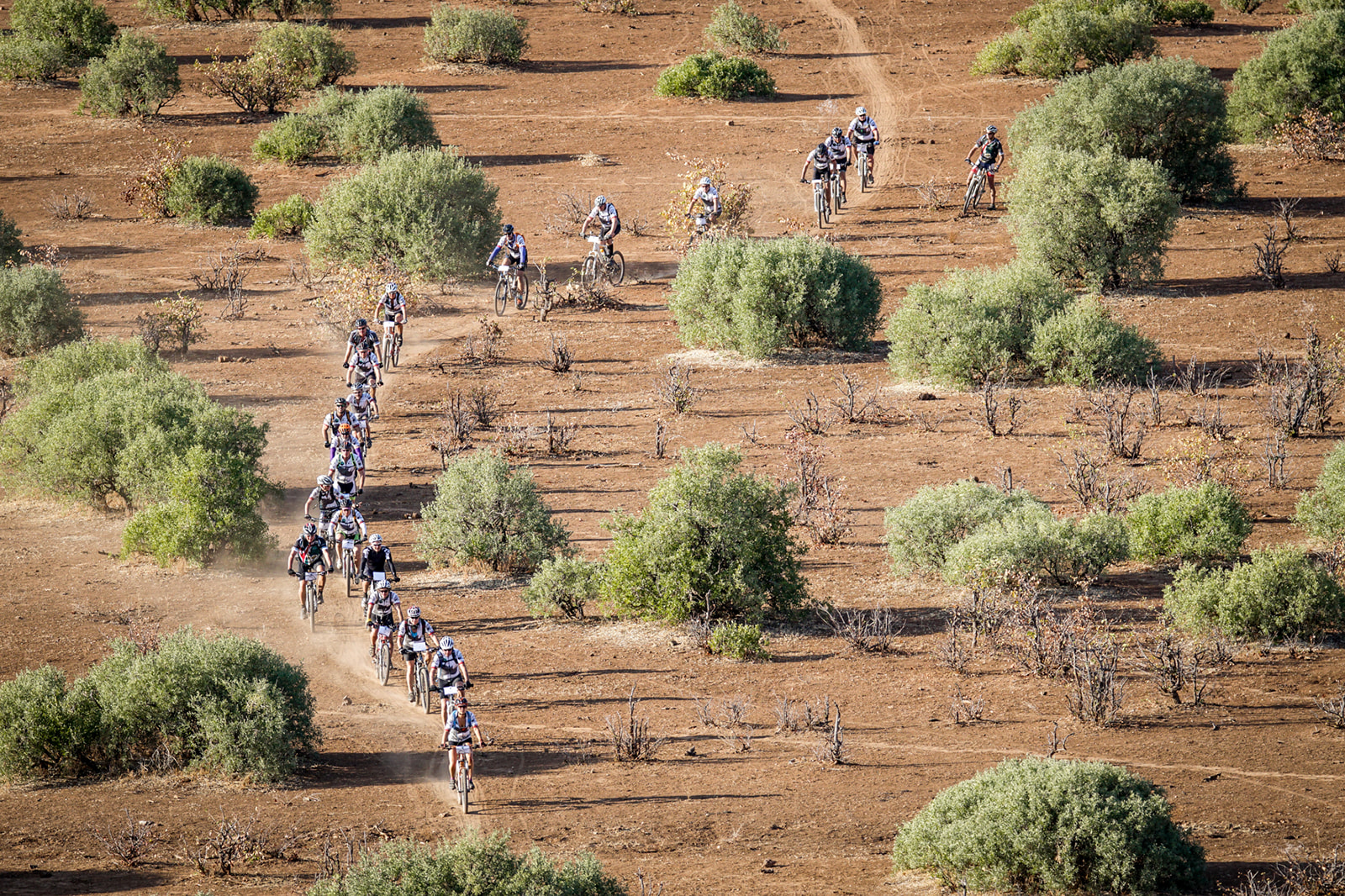
I was one of 330 riders taking part in the annual Tour de Tuli, a four-day mountain biking endurance adventure organised by Wilderness Safaris.
Over the course of four days, we cycled 275km across some of the most remote and wild terrain in southern Africa, weaving our way through south-eastern Botswana, northern South Africa and south-western Zimbabwe.
Each day meant around eight hours in the saddle. Up to 80km of riding. And terrain that constantly kept us on our toes… and very often, off our bikes.
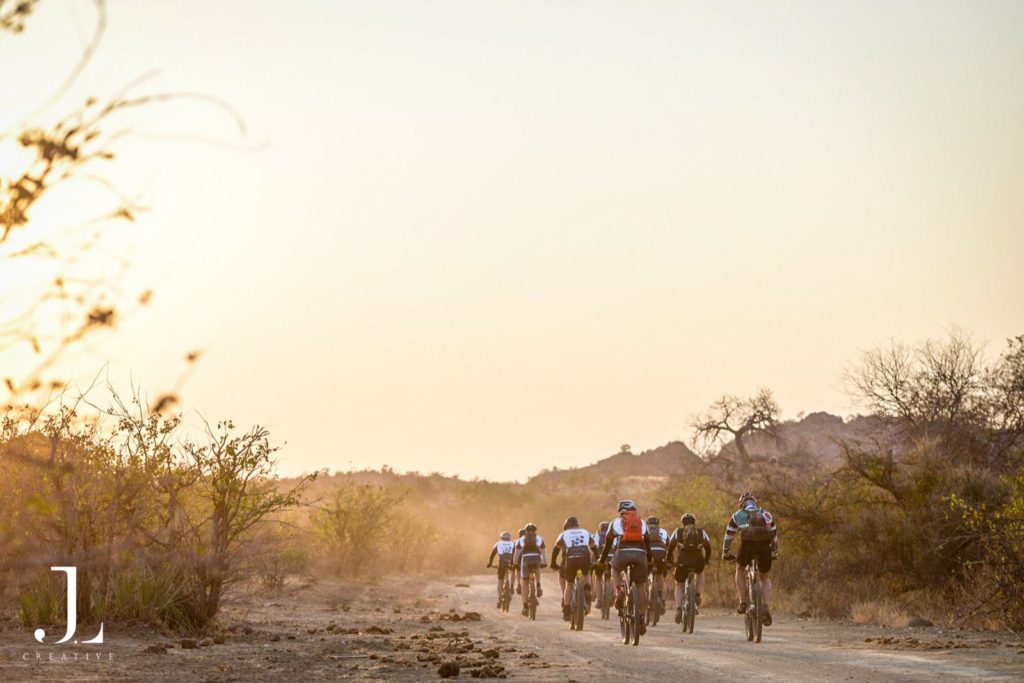
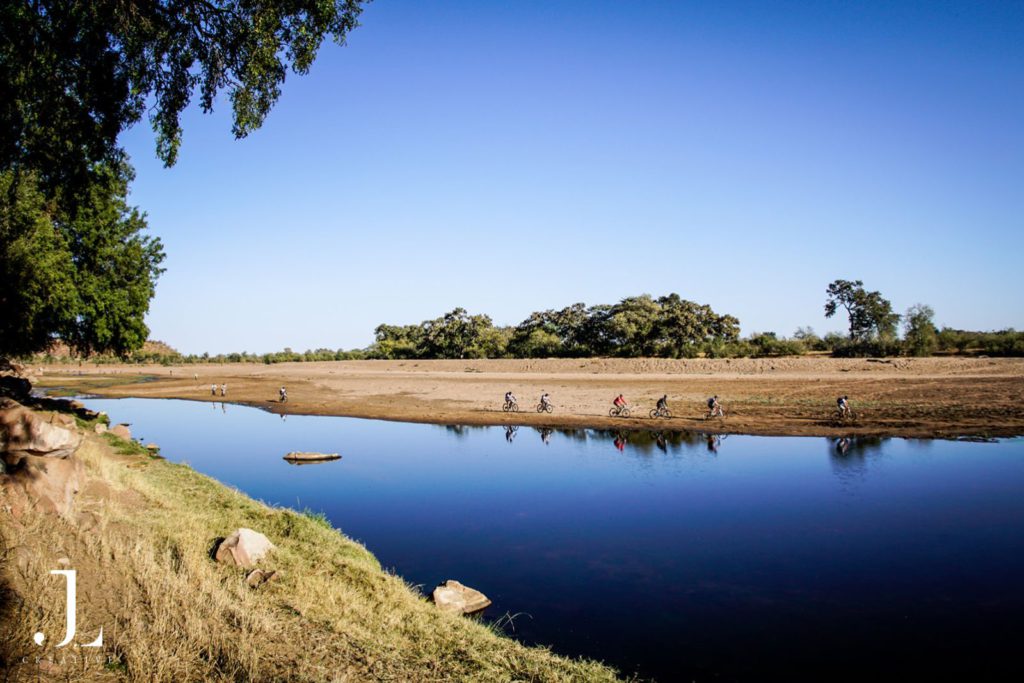
We rode over winding elephant tracks and wildlife trails, through deep sand, across steep stone ridges, over rivers and dry riverbeds, through indigenous forest and out onto vast open plains. It was raw, rugged and relentlessly beautiful.
But it wasn’t just the terrain we had to think about.
There were animals out there too.
And not the kind you casually pass on a Sunday cycle ride in London.
Riding Through the Wild
This was a safari… on two wheels.
So while our eyes were constantly scanning the ground ahead, navigating rocks, sand and ruts, they were also flicking up to the treeline, checking for movement.
Elephant. Lion. Leopard.
The knowledge that we were riding through their territory never left us.
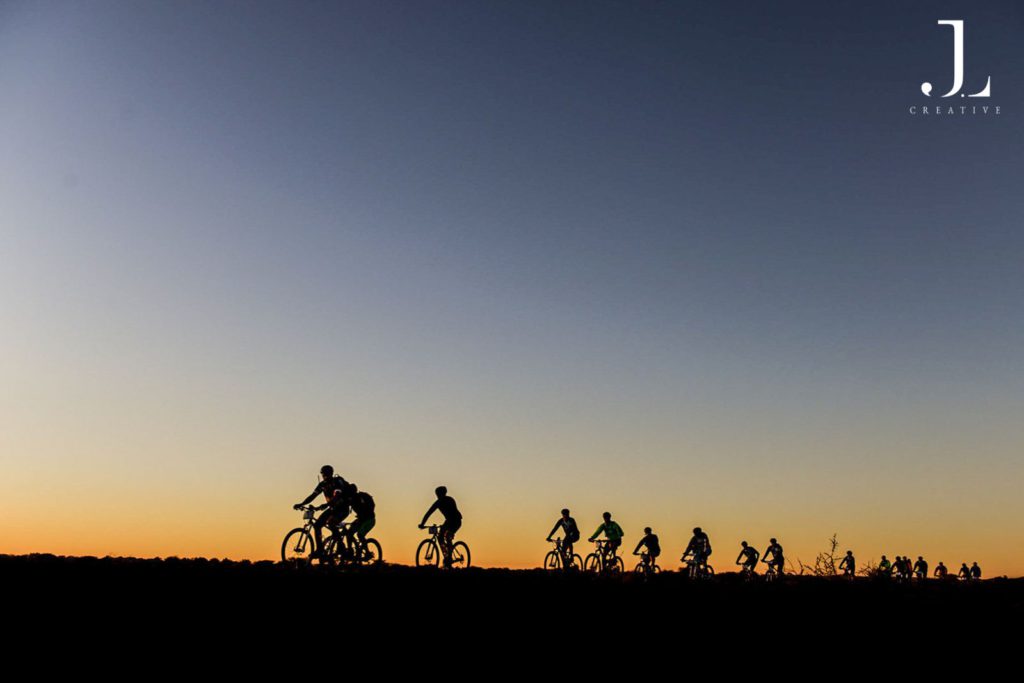
Each morning, we set off at dawn, the light soft and golden, the air still cool before the heat of the day settled in. And as the sun climbed higher, so did the intensity of the ride.
We were incredibly lucky with wildlife sightings.
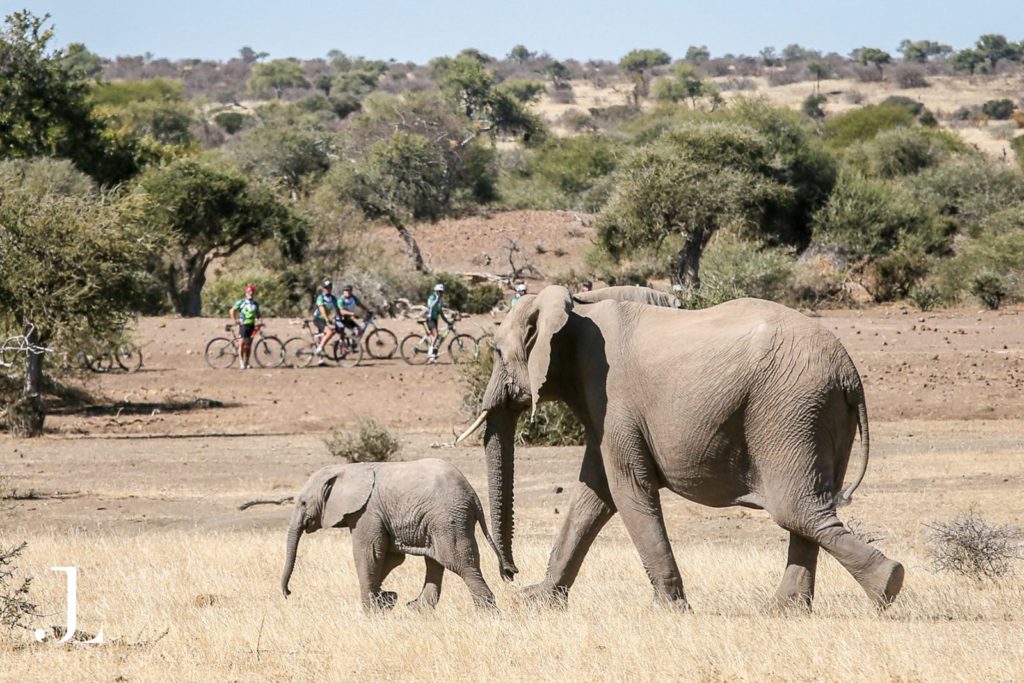
We rode past herds of elephant, giraffe, zebra, kudu, eland and even crocodiles. Overhead, raptors soared effortlessly in the thermals, while flashes of colour from lilac-breasted rollers and crimson-breasted shrikes added bursts of brilliance to the dusty landscape.
At night, lying in our tents, the sounds of the bush carried through the darkness. Lions roaring in the distance. The deep, unmistakable call echoing through the night… occasionally interrupted by the rather less majestic soundtrack of 300 cyclists snoring.
Moments That Stay With You
There were two encounters in particular that will stay with me forever.
The first happened after we had just battled our way through a deep, sandy riverbed. One of the riders stopped to fix a mechanical issue, giving the rest of us a moment to catch our breath. We stood there quietly, sipping water, when our team leader suddenly signalled for silence.
Completely still.
Through the dappled woodland ahead, about 20 metres away, a herd of elephants moved silently between the trees. There was no drama and no noise. Just presence.
We didn’t move. We barely breathed.
Then, just as quietly as they appeared, they were gone. We got back on our bikes and carried on, each of us quietly processing what had just happened.
The second encounter was equally special, but very different in tone. We approached a waterhole in Zimbabwe where a breeding herd of elephants were drinking. This time we dismounted and slowly walked closer, approaching from upwind.
They knew we were there. They simply didn’t mind.
Standing there, watching them drink while completely at ease in their natural habitat, was nothing short of extraordinary.


The A Team
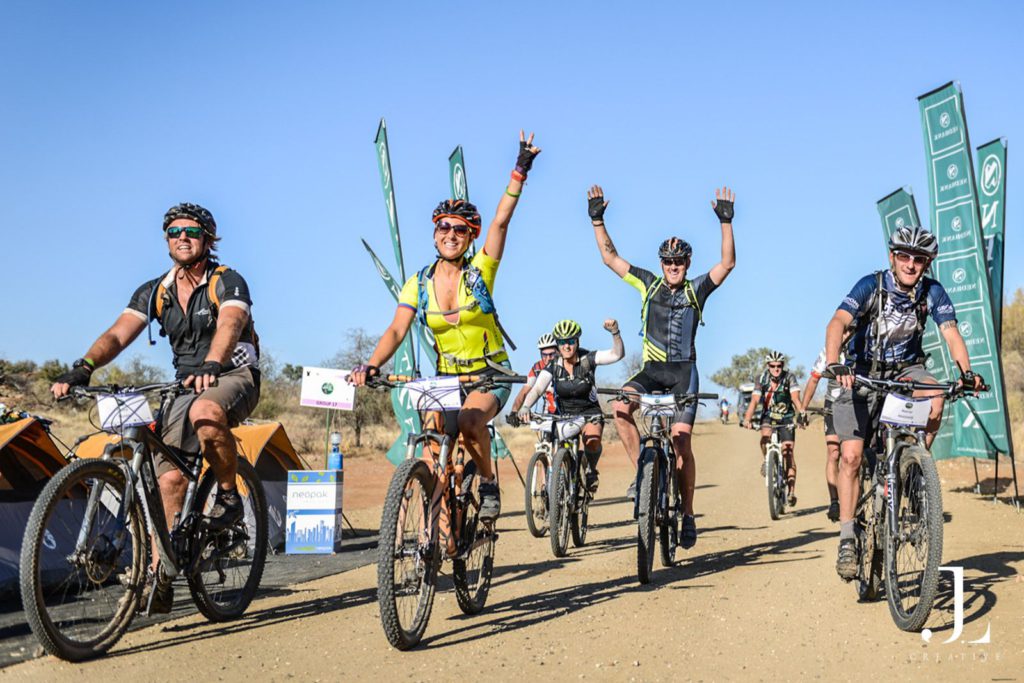
I was in Group 18, although we quickly decided that sounded far too dull and rebranded ourselves as The A Team. Much better.
We were a mix of nationalities, mostly South African, with a few internationals thrown in, including one Australian, two Americans, and me, proudly labelled the “bubbly Brit.”
What happens in situations like this is quite incredible. Friendships form fast. Real ones. There is something about being thrown into a physically demanding, slightly mad adventure together that strips everything back. There is no pretence, no small talk, just shared experience, support, encouragement, and a lot of laughter.
I was paired with two experienced mountain bikers, Donads and Rainer, who honestly became my lifeline over those four days. Their encouragement, humour, and unwavering support got me through moments where I genuinely didn’t think I could continue.
There may also have been a couple of cheeky beers consumed at a water stop. Allegedly.
The Reality Check
Now, let’s talk about the hard part. This ride was not easy. In fact, it was probably the hardest physical challenge I have ever taken on.
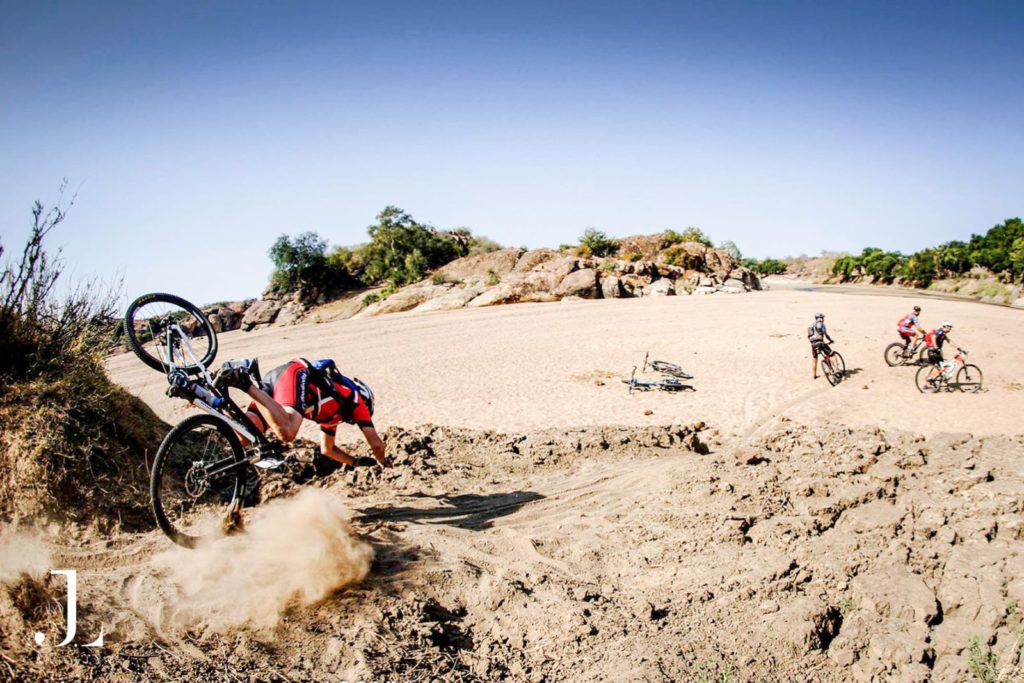
The terrain was relentless and unlike anything I had experienced in my UK training. Deep sand swallowed your wheels, loose rocks demanded full concentration, and narrow winding tracks through dense bush meant one wrong move could send you flying. Which, as it turns out, it did.
I fell five times on the first morning. FIVE!
There was a steep learning curve, but I adapted quickly, figuring out how to handle the bike across different terrains. After that first morning, I only fell four more times over the remaining days, which I consider a significant improvement.
One crash, however, deserves special mention. We were riding at a good pace through mopane scrub, following a narrow, winding animal track. The camp was just a few kilometres away, and the thought of ice-cold drinks was very much driving us forward. I didn’t see the tree stump until it was far too late. Full impact. Bike airborne. Me airborne. Somehow, I cleared the bushes and landed with one almighty thud on the ground.
There was a moment where everything just stopped. I couldn’t move. I lay there trying to piece together what had happened and assess what still worked. Miraculously, nothing was broken. Just bruises, cuts, and a very dramatic story to tell.
Others weren’t quite as lucky. Broken bones, heatstroke, and mechanical failures were all part of the wider Tour experience.


Training for the Unknown
Looking back, my preparation for the Tour de Tuli was enthusiastic, but perhaps not entirely aligned with what lay ahead.
In the lead-up, I focused heavily on endurance and strength training back home in London. Long sessions on the bike built stamina, combined with strength work with my personal trainer to ensure I had the power and resilience needed for four consecutive days in the saddle. Leg strength, core stability, and cardiovascular endurance were all ticked off.
That foundation absolutely helped. There is no question that without that level of fitness, completing the Tour would have been significantly more difficult.
But what I hadn’t quite accounted for was the technicality of the riding. The UK training rides I had done, whilst useful, didn’t fully prepare me for the kind of terrain we encountered in the Tuli Block. Deep, shifting sand required constant momentum. Loose rocks demanded precise handling. Sudden drops, sharp turns, and narrow bush trails left very little room for error.
This wasn’t just about fitness. This was about skill.
The first morning became a very fast learning curve. Five falls later, I had a quiet but firm word with myself, adjusted my approach, and started to really tune into the bike, the terrain, and the rhythm of the ride.
From that point on, everything began to click. I learned when to stay light on the handlebars, when to power through, when to trust the bike, and when to ease off. I became more intuitive, more responsive, and far more confident in my riding.
And that, in many ways, became one of the most rewarding parts of the entire experience. It was not just about enduring the challenge. It was about adapting to it.
Heat, Hydration & Survival
With temperatures soaring above 33°C, hydration was absolutely critical. Water stops every 20 to 30 km became sacred.
And what awaited us there was nothing short of heaven. Ice-cold drinks, snacks, and smiling volunteers. Biltong, fruit, nuts, cheese, crackers, boiled potatoes, and the surprisingly elite combination of Dairy Lea and biltong crackers, which I can confirm is a winning snack.
But the real hero was ice. Actual ice in the middle of the African bush. We would shovel handfuls into our CamelBaks and bottles, creating that blissful moment of icy cold water with every sip.
My CamelBak wasn’t just useful; it was essential. I genuinely would not have completed the ride without it.
Life in Camp
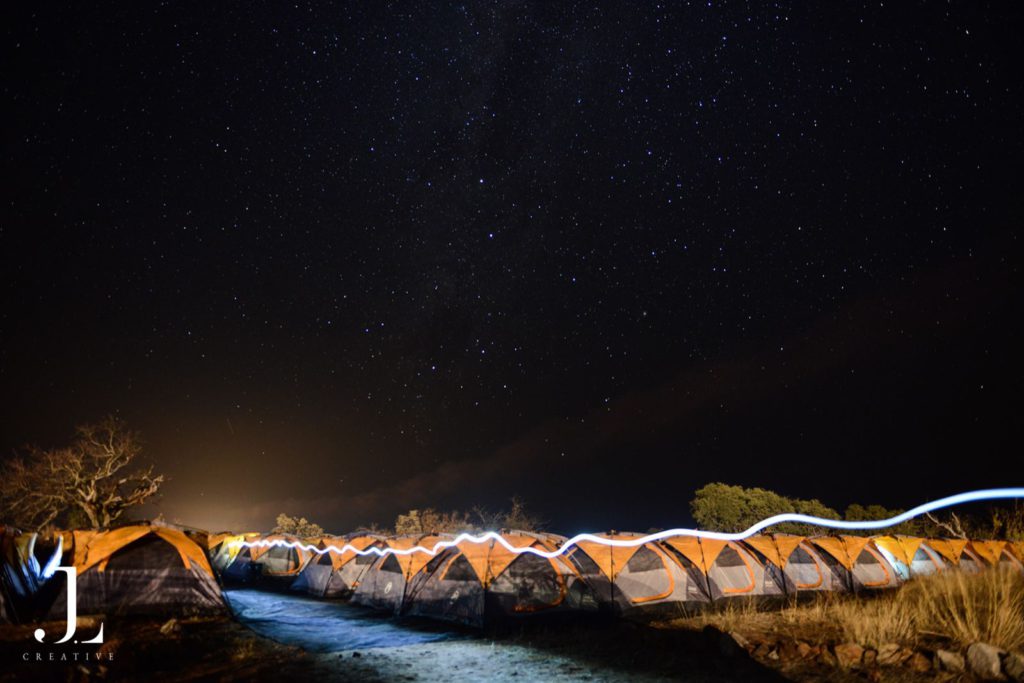
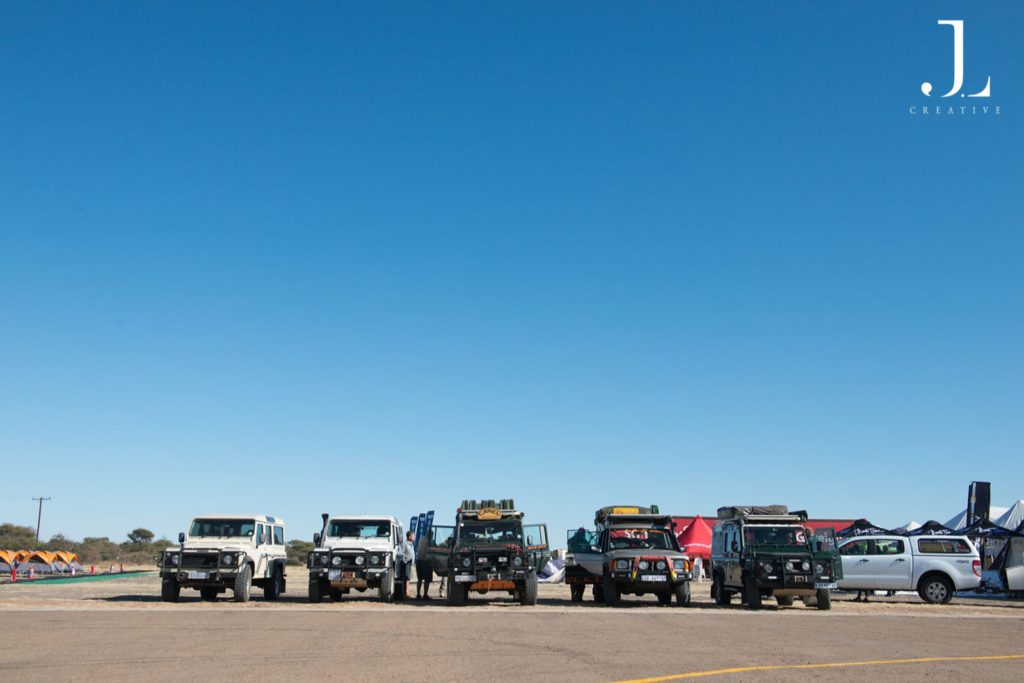
The organisation of the Tour was extraordinary. Two remote bush camps were set up, complete with hundreds of tents, hot showers, charging stations, a fully stocked bar, bike workshops, and even massage tents.
Each day, we would ride in, dusty, exhausted, and completely spent, only to be welcomed into what felt like a fully functioning mini village in the middle of nowhere. The logistics behind it all were staggering.
And the volunteers were incredible. Tireless, positive, and always smiling, even when dealing with breakdowns, delays, and the endless demands of 300 plus cyclists.






The Magic of Massage
One of the absolute highlights of each day was the massage tent. An army of therapists worked their magic, delivering over 1,400 massages across the four days.
After hours in the saddle, those massages were not just appreciated. They were essential.
Tony the Tiger: The Bike That Carried Me Through
Now, let’s talk about Tony the Tiger. Honestly, this bike deserves his own moment.
Tony was my mountain bike for the Tour, and he wasn’t just any bike. He was gifted to me by Giant, and from the moment I got him, I knew I was working with something seriously special.
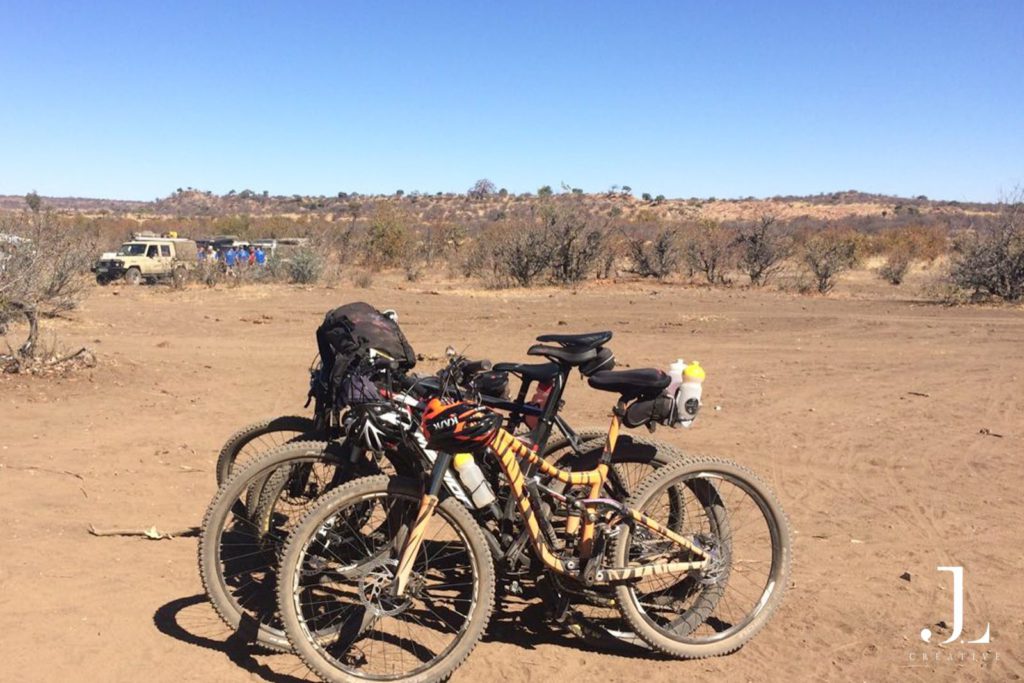
This was a proper, all-singing, all-dancing machine, built for exactly this kind of terrain. A lightweight yet robust frame, perfectly balanced geometry, and a suspension setup that could handle everything the African bush decided to throw at us. Front suspension. Rear suspension. Full control. And trust me, I needed it.
The technical riding on the Tour de Tuli is no joke. You are constantly adapting, shifting your weight, reading the terrain ahead, and adjusting your cadence, line, and braking. Riding through deep sand requires momentum and confidence. Rocky ridges demand precision and control. Narrow, winding single tracks through mopane scrub require quick reactions and complete focus.
It is dynamic riding. Proper mountain biking. And Tony handled it beautifully. The suspension soaked up the impact from rocks and uneven terrain, giving me stability where I would otherwise have been thrown off balance. The tyres gripped where I expected to slide. The frame felt responsive and agile, especially when navigating tight turns or sudden changes in terrain.
And then there were the cleats. Clipped in, fully committed. There is something quite humbling about being attached to your bike when you are still figuring out how to stay upright on deep sand and loose rock. Once I found my rhythm, the efficiency of clipped-in riding made a huge difference, especially over longer distances and climbs.
Of course, Tony didn’t just perform well, he looked the part too. Thanks to the brilliant team at Calm and Ready, he was wrapped in full tiger stripes, turning him into a proper head-turner out on the trail. A little bit wild. A little bit ridiculous. Completely perfect.
In a strange way, that visual identity became part of the journey. Tony the Tiger wasn’t just a bike. He became a teammate. Reliable. Strong. Always ready.
Despite my early falls, questionable line choices, and occasional lack of technical finesse, he carried me through every single kilometre. Not a single puncture. Not one mechanical issue. Out there, that is nothing short of a miracle.
In hindsight, I may have spent slightly more time perfecting Tony’s tiger stripes than refining my technical riding skills, but thankfully, he was far more capable than I was.


Capturing the Adventure: Photography on the Tour de Tuli
For someone who has spent so much of her life behind the lens, it felt slightly surreal to be in the adventure rather than documenting every second of it.
This time, I wasn’t carrying my full professional kit. There was no trio of camera bodies, no lens changes mid-scene, and no carefully composed frames at golden hour.
This was different. This was about being fully immersed in the experience while still capturing moments where I could.
I travelled light, with a compact camera setup that could handle the dust, the movement, and the unpredictability of the ride. My camera was clipped securely to the strap of my hydration pack using the brilliant system from Peak Design, which meant I could access it quickly without disrupting the flow of the ride.
That setup was everything. Moments on the Tour de Tuli do not wait. They appear suddenly and disappear just as quickly. A herd of elephants crossing the trail. A rider silhouetted against the rising sun. Dust hanging in the air as the group powers through a sandy stretch. A shared laugh at a water stop. Blink, and it is gone.
Having a lightweight, accessible setup allowed me to capture those fleeting snippets of magic without missing the ride itself.
While I was only able to take a small number of images compared to my usual work, those photographs feel incredibly special. They carry the dust, the sweat, the laughter, the effort, and the realness of the experience.
Of course, the Tour de Tuli is supported by an exceptionally talented team of photographers who capture the event in all its glory. From dramatic wildlife encounters to sweeping landscape shots and high-energy riding moments, they document the story of the Tour in a way that is both powerful and deeply evocative.
It was a joy to witness their work and to be part of a world where adventure and storytelling come together so seamlessly.
The Support Behind the Adventure
Adventures like this are never done alone.
Behind every rider is a network of support, and I was incredibly fortunate to have some brilliant brands backing me on this journey.
A huge thank you to:
- Giant for the incredible mountain bike, Tony the Tiger, who quite literally carried me across 275km of wild terrain
- Peak Design for their clever and practical camera carry systems, which made shooting on the move effortless
- Jack Wolfskin for the hydration pack and essential gear that kept me going in the heat
- Fixation for camera support and equipment
And of course, a special mention to Calm & Ready for turning Tony into the most fabulous tiger-striped machine on the trails.
It really did take a team.
The Photographers Behind the Tour
The Tour de Tuli is beautifully documented each year by an incredibly talented group of photographers who capture the essence of the ride, the landscapes and the wildlife with skill and artistry.
Big shout out to the amazing and extremely talented endurance photographers that provided brilliant coverage of the event and whose photos I have shared in this post alongside mine: Mike Sutherland, Jacques Marais, Caroline Culbert.
Their ability to tell the story of the Tour through imagery is nothing short of inspiring, and it was a privilege to experience the event both as a rider and as someone who deeply appreciates the craft behind the lens.
Why It Matters
At its heart, the Tour de Tuli is about more than just adventure.
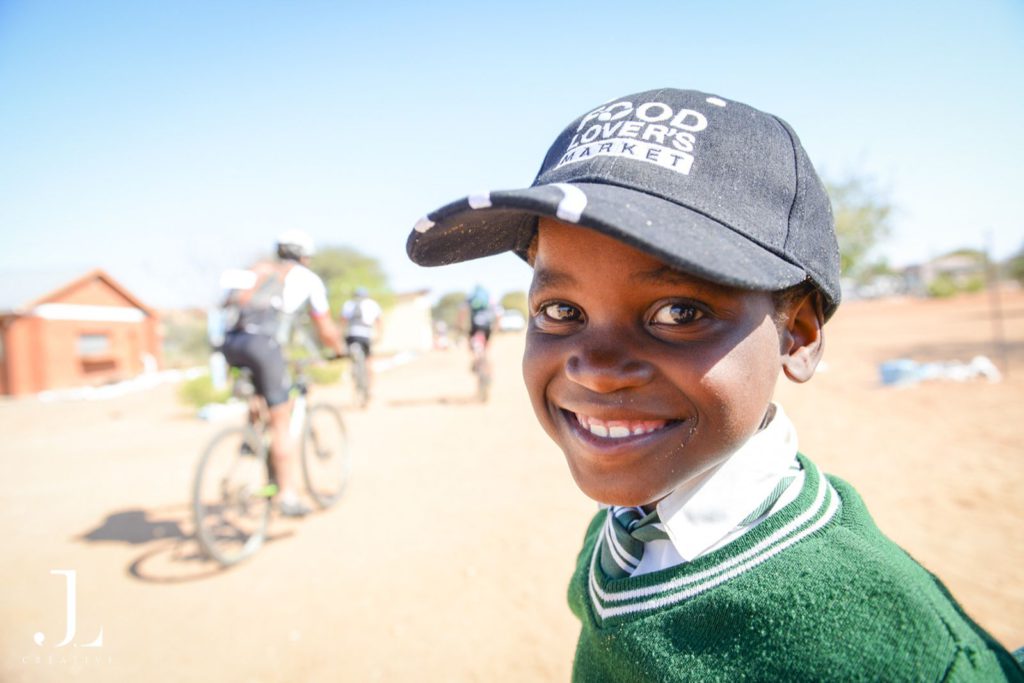
It raises funds for Children in the Wilderness, a remarkable organisation focused on conservation education across Southern Africa.
Cycling through these landscapes, witnessing their beauty and fragility first-hand, makes that mission feel incredibly real.


The Aftermath
Certain moments from the Tour come flooding back in flashes: clicking cleats, grinding gears, sunrise cappuccinos, ice-cold water, deep sand, elephant tracks, sunset skies, endless laughter, camaraderie, chaos, and joy.
There is also the overwhelming sense of achievement.
In all honesty, if I had known just how tough this would be, I might not have signed up. But I did, and I finished. I am so incredibly proud that I did.
Would I Do It Again?
Without hesitation. Yes, in a heartbeat.
Africa, you have captured yet another piece of my heart. I cannot wait for the next adventure.
From Two Wheels to Four Hooves
Endurance takes many forms.
From cycling 275km across the wild landscapes of southern Africa to documenting the power, precision and stamina of endurance horse racing back in the UK, there is a shared thread that runs through these experiences. Grit. Focus. Connection with the environment. And that deep, unspoken understanding of what it means to keep going when your body is tired but your mind is fully in it.
If you’ve enjoyed this glimpse into the Tour de Tuli, you might also love stepping into another world of endurance and athleticism through my photography at Euston Park, where I captured the intensity and elegance of international endurance horse racing.


FAQs: Tour de Tuli Cycling Adventure
How tough is the Tour de Tuli really?
In a word, tough. It is also exhilarating, rewarding, and completely unforgettable. You ride long distances in high temperatures across constantly changing terrain. Deep sand, loose rock, narrow single tracks, and river crossings all demand focus, adaptability, and resilience. It is not just about physical fitness. Mental strength is essential as well, especially the ability to keep going when you are tired, hot, and questioning your life choices.
Do you need to be an experienced mountain biker?
Confidence on a mountain bike definitely helps. While you do not need to be an elite rider, the terrain can be technical. Being comfortable handling your bike across sand, rocks, and uneven surfaces makes the experience much more enjoyable. That said, you learn very quickly once you are out there.
What is it like cycling with wildlife around you?
It is a surreal experience. There is a constant awareness that you are moving through a living, breathing ecosystem. This is wild Africa, not a controlled environment. Encounters are handled carefully and respectfully, with experienced guides and team leaders ensuring safety. At the same time, there is always a sense of excitement and humility. You are a visitor in their world.
What was the most special wildlife moment?
For me, it was standing completely still as a herd of elephants passed just metres away through the trees. No noise and no rush, only quiet coexistence. It was one of those moments where time slows down, and you feel incredibly small in the best possible way.
How do you manage the heat and hydration?
Hydration is absolutely critical. With temperatures reaching well over 30°C, you are constantly drinking, refilling, and managing your energy levels. Hydration packs are essential, and the water stops along the route become moments of pure joy. Ice-cold water in the middle of the African bush is unbeatable.
What is camp life like?
Camp life is one of the highlights. After a long day in the saddle, arriving at camp feels incredible. There are hot showers, great food, cold drinks, and most importantly, a real sense of community. Evenings are filled with laughter, storytelling, and shared experiences under vast, star-filled skies.
What makes the Tour de Tuli so unique?
It is the combination of adventure, wildlife, physical challenge, community, and purpose. You are not just cycling. You are experiencing Africa in one of the most raw and immersive ways possible while also contributing to an incredible cause through Children in the Wilderness.
Would you recommend it?
There were moments of doubt, exhaustion, and questioning my sanity, but there were far more moments of joy, connection, and absolute awe. Without hesitation, I would say yes. It is tough, but it is also one of the most rewarding and memorable experiences you can have. If you are even slightly tempted, take the leap and do it.


0 Comments