

Some of the most meaningful photography assignments take place far from polished boardrooms, conference stages or luxury interiors.
They happen in places where photography has the power to document change, tell important stories and help organisations share the impact of their work.
One such assignment took me to Diego Suárez High School in northern Madagascar, where I was photographing an education project supported by the NGO The Ladybug Project.
As an international development photographer and someone who has travelled extensively across Africa, experiences like this remind me why photography can be such a powerful tool for storytelling.
Travelling the World With My Camera
Travel has always been a huge part of my life and my photography career.
So far I’ve travelled to more than 70 countries, with 20 of those in Africa, and I still feel the same excitement every time I step onto a plane with my camera bag packed and ready.
Africa in particular holds a very special place in my heart.
The continent’s landscapes, cultures and communities are endlessly inspiring, and I’ve been fortunate to work on a range of photography projects across Africa including safari lodge photography, conservation work and NGO assignments.
Working with charities and development organisations allows me to combine two things I care deeply about: photography and meaningful storytelling.
The project at Diego Suárez High School was one of those assignments.
Diego Suárez High School, Madagascar
At first glance, the entrance to Diego Suárez High School might not immediately suggest that something extraordinary is happening inside.
A rusty, faded sign hangs beside a crumbling concrete wall. Nearby stands a small corrugated tin shack that has clearly seen better days.
But as is so often the case in development work, appearances can be deceptive.
Set in the heart of Diego Suárez (also known as Antsiranana), a dusty town in northern Madagascar where weathered colonial buildings line the streets, this school is quietly providing education to more than 1,500 students.
A year before my visit, the NGO The Ladybug Project began funding initiatives at the school in an effort to improve learning conditions and provide support for both teachers and pupils.


A Morning at the School
At 7:15am, the school day began.
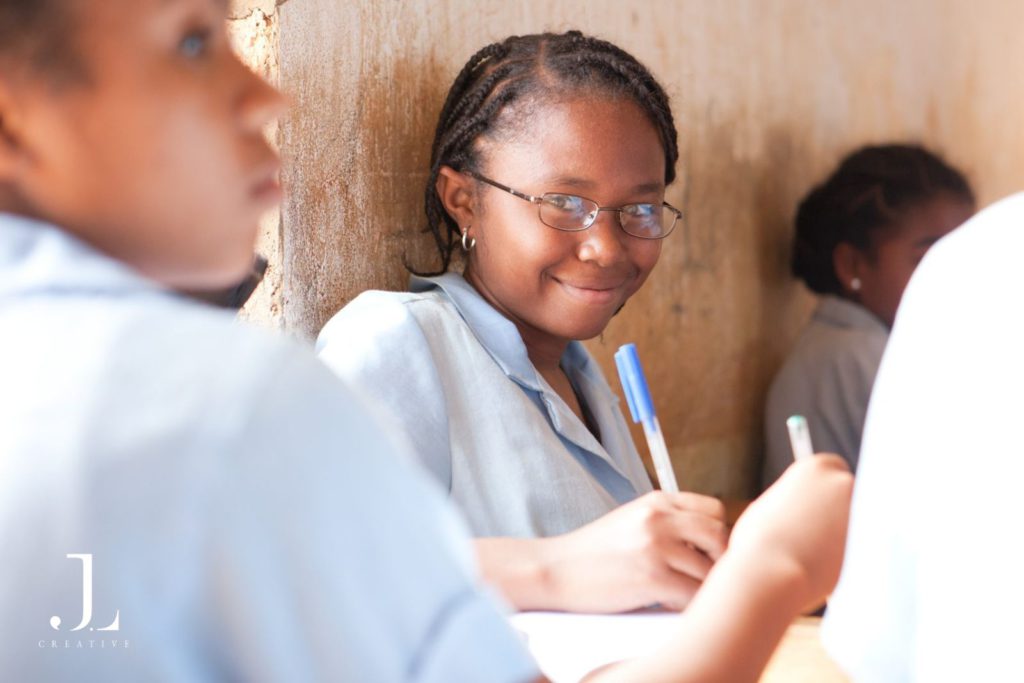
Students started arriving in a steady stream, dressed in their light blue uniforms and chatting animatedly as they gathered outside their classrooms.
There was still a slight coolness in the air thanks to a gentle morning breeze, though everyone knew it wouldn’t be long before the heat of the day arrived.
Some students sat quietly reviewing their exercise books before class. Others perched along the low walls in the courtyard, frantically finishing homework assignments that were meant to be completed the night before.
Meanwhile, the first pupils to enter the classroom began sweeping dust and leaves from the floor before the lesson began.
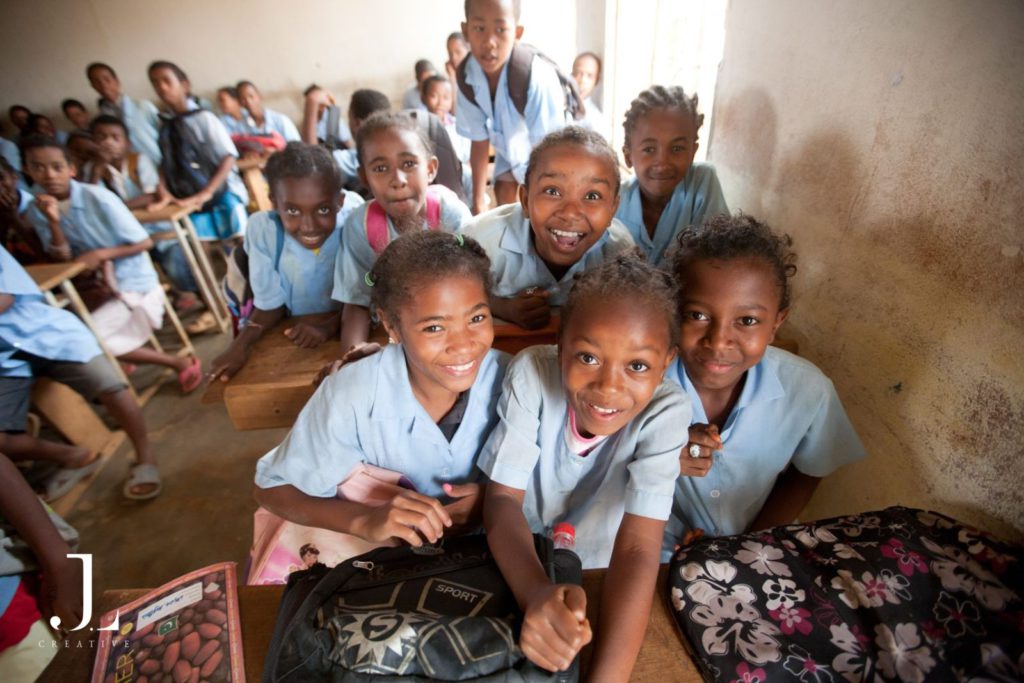
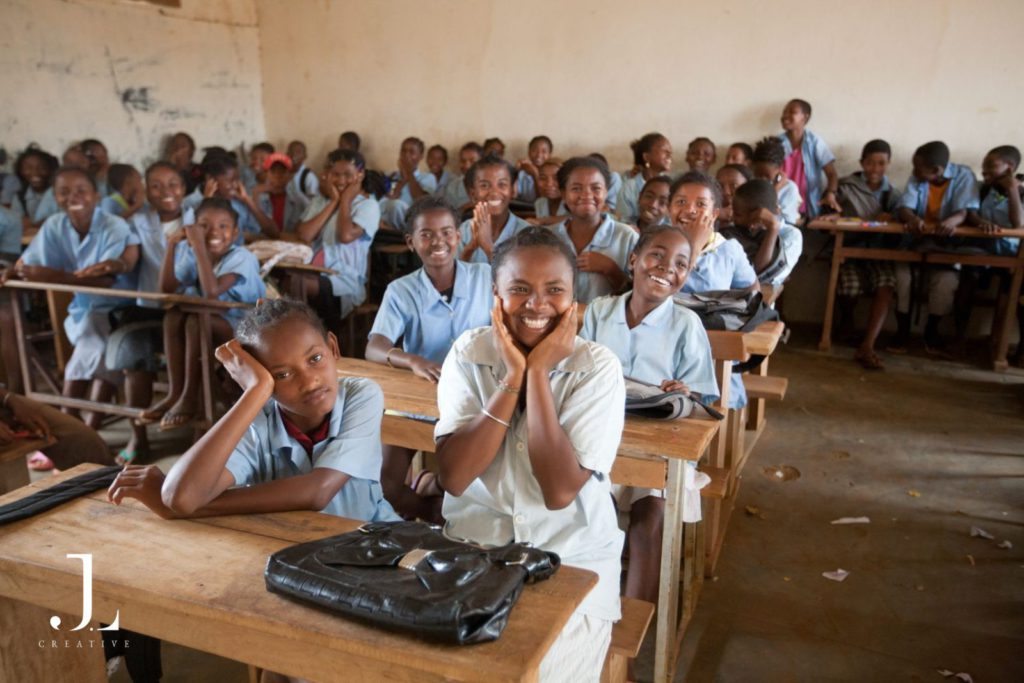
With 94 pupils in the classroom, organisation takes time.
One by one the students presented their homework to the teacher for inspection before being allowed to take their seats.
The desks were simple wooden structures with benches attached, each just large enough to accommodate three students.
As the room slowly filled, the English lesson began.
A Classroom Without Electricity
The lesson that morning focused on introductions, numbers and classroom objects.
Despite the limited resources available, the pupils listened attentively to their teacher.
They repeated phrases aloud, answered questions and carefully copied words and sentences into their exercise books.
Their enthusiasm for learning was unmistakable.
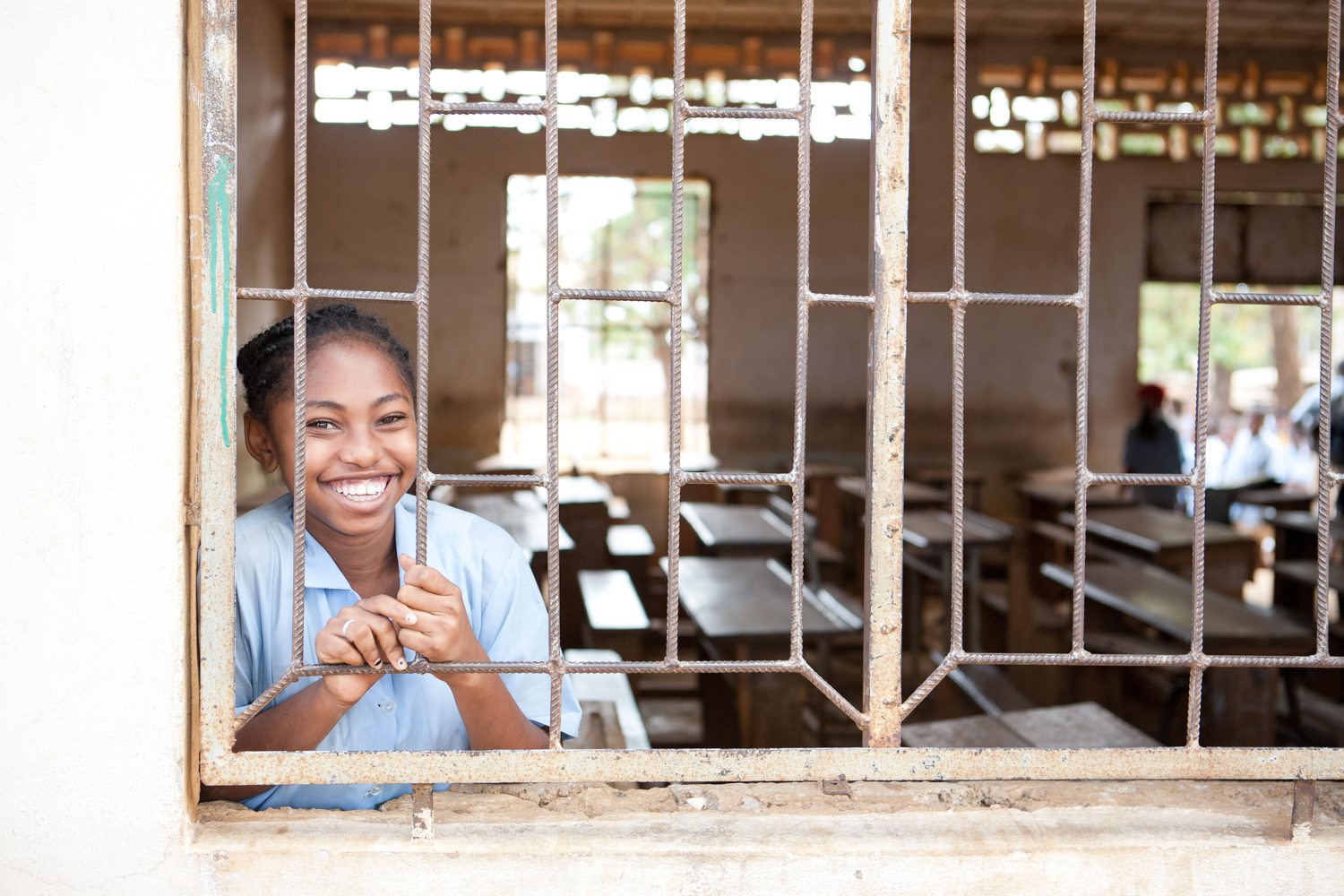
One of the most striking aspects of the classroom was the complete absence of electricity.
The room was illuminated solely by sunlight streaming through the open door and three large windows, which had no glass panes. Instead, horizontal metal bars allowed air to circulate freely through the room.
The breeze provided welcome relief from the heat, though it also carried dust and leaves from the central courtyard.


The Reality of the School’s Conditions
The physical state of the school buildings revealed just how challenging the environment is for both students and teachers.
The structures had not been renovated since Madagascar gained independence in 1960.
Large cracks ran down the concrete walls, and the remaining patches of paint had long since begun to peel away.
A long blackboard stretched across the front of the classroom, though years of use had made it difficult to clearly see the chalk writing.
Above the students’ heads, sections of the ceiling were missing entirely, exposing the corrugated metal roof above.
During the lesson, light rain began to fall.
With holes in the roof, droplets of rain slowly began falling into the classroom and onto the pupils below.
One can only imagine how difficult lessons must become during a heavy downpour.
Challenges Beyond the Classroom
The communal areas of the school offered little more comfort.
During break times, students gathered under the small number of trees on the premises for shade.
There were two basketball hoops in the courtyard but no basketballs to play with.
There was no running water at the school.
This meant there were no drinking fountains and no facilities for students to wash their hands.
The long-drop toilets were in an extremely poor condition.
For many visitors, these conditions are shocking.
But for the students and teachers at Diego Suárez High School, they are simply the daily reality.
The Importance of NGO Support
Madagascar is one of the poorest countries in the world, and the nation’s education system faces enormous challenges.
In recent years, funding for education has been severely reduced.
At one point the government cut education funding by 30%, and due to political instability, many Western nations withdrew non-essential aid programmes.
As a result, schools across Madagascar have had to continue operating with extremely limited resources.
Teachers often go unpaid for extended periods, classrooms remain overcrowded and facilities deteriorate without funding for repairs.
This is where NGOs such as The Ladybug Project play a crucial role.

The Role of The Ladybug Project
Despite limited resources, the work already carried out by The Ladybug Project in just one year has been significant.
The organisation is working closely with both school leaders and local officials to gradually improve conditions.
Future plans include:
- building sufficient desks for each classroom
- replacing blackboards in all teaching rooms
- renovating bathroom facilities
- repairing damaged walls and structures
- repainting the school buildings
- providing training opportunities for teachers
Larger infrastructure improvements are also planned.
These include introducing electricity and running water to the school.
While these developments require funding and time, the commitment from both the NGO and the school leadership is clear.
The Headmaster’s Vision
The headmaster of Diego Suárez High School has a clear vision for the future.
He understands the scale of the challenges but remains determined to improve the learning environment for his students.
Currently the school accommodates 1,510 pupils across just 14 classrooms.
This means class sizes often exceed 100 students.
Despite these difficult conditions, teachers continue to provide the best education they can with the resources available.
And the students themselves remain motivated, curious and eager to learn.


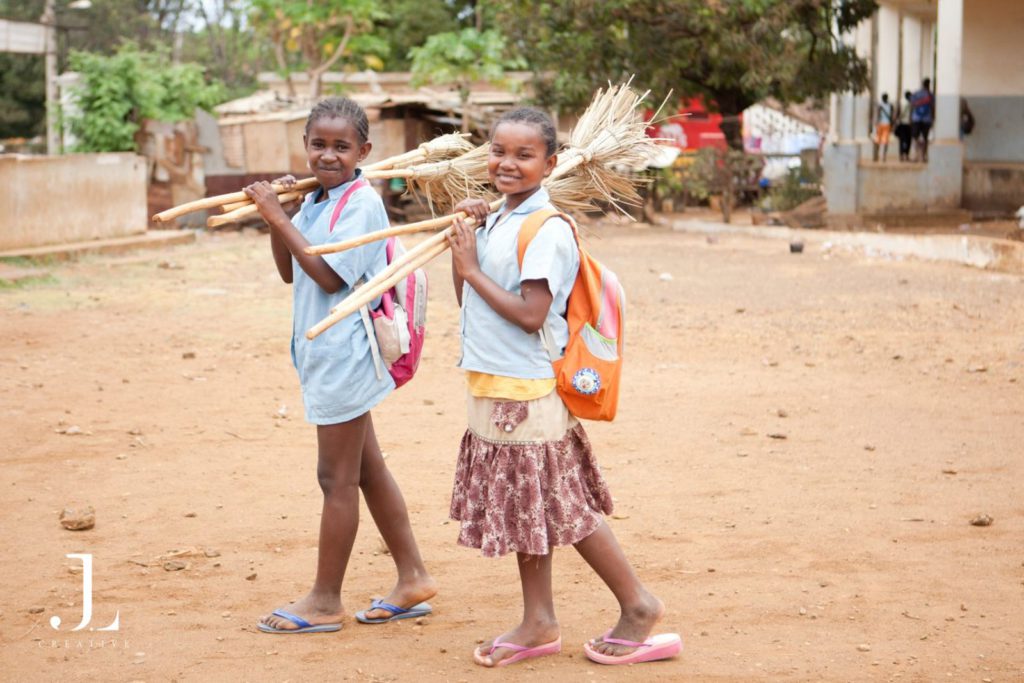
Why Photography Matters for NGOs
Assignments like this highlight the important role photography plays in international development and charity work.
For NGOs, professional photography helps:
- document the reality on the ground
- communicate the impact of their projects
- raise awareness among supporters
- secure funding from donors and foundations
- tell the human stories behind development programmes
Powerful images can help organisations show not only the challenges communities face, but also the resilience, determination and progress that exist alongside them.
As a photographer working with NGOs, my goal is always to capture these stories with authenticity, dignity and respect.
Photography for NGOs and International Development Projects
Photographing NGO projects requires a different approach from many other types of photography.
It is about listening, observing and documenting real life as it unfolds.
Rather than staging images, the aim is to capture genuine moments that reflect the reality of the community.
This might include:
- classrooms in action
- teachers guiding students
- daily life within the school
- portraits of students and staff
- the environment surrounding the project
These images help organisations communicate their work to donors, supporters and the wider world.
A School That Wants Opportunity, Not Pity
One of the most striking things about Diego Suárez High School is the spirit of the students.
They are not looking for pity.
They simply want the opportunity to learn.
Education offers the possibility of a different future, and despite the difficult conditions, these students approach their studies with determination and enthusiasm.
Change is happening here.
Children are learning.
And organisations like The Ladybug Project are helping make that possible.


Photographing NGO Projects Around the World
As someone who has travelled to more than 70 countries and photographed across 20 countries in Africa, I feel incredibly fortunate to have experienced so many different cultures and communities through my work.
Photography assignments for NGOs and development organisations are among the most meaningful projects I undertake.
They allow me to combine storytelling, travel and social impact in a way that truly matters.
Whether documenting education programmes, conservation work or community initiatives, photography helps share stories that deserve to be seen and heard.
Frequently Asked Questions About NGO Photography
What does an NGO photographer do?
An NGO photographer documents the work of charities and development organisations around the world. This includes photographing community projects, education initiatives, conservation work and humanitarian programmes to help organisations communicate their impact through powerful visual storytelling.
Why is photography important for NGOs?
Photography helps NGOs share the reality of their work with donors, partners and supporters. Strong images can raise awareness, strengthen fundraising campaigns and communicate the impact of development projects more effectively than words alone.
What types of projects do NGO photographers photograph?
NGO photographers often document:
- education projects
- healthcare initiatives
- conservation programmes
- community development work
- environmental projects
- humanitarian aid efforts
These photographs help organisations tell the stories of the people and communities they support.
0 Comments